

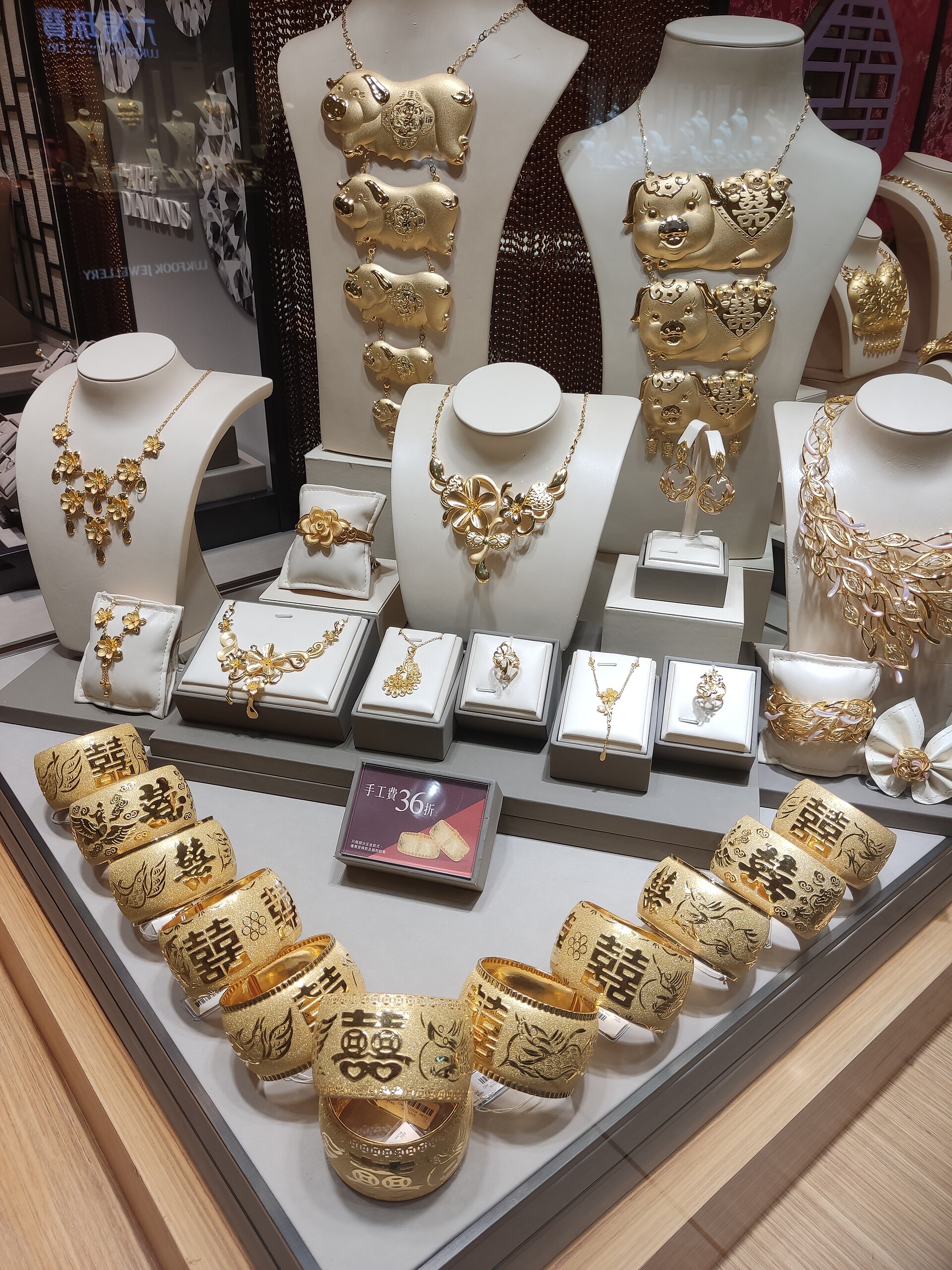
Long before gold was an asset class, it was an adornment. Jewellery remains the metal’s largest single use — roughly half of all demand in a typical year — and its oldest: five thousand years of brides, festivals, dowries and dynasties. That ancient customer now faces prices that have doubled within a few years, and the question hanging over the trade from Istanbul to Jaipur is how the world’s gold lovers respond when their metal becomes dear.
The answer, so far, is a split screen. By weight, jewellery demand has softened — buyers in China and India, the two great jewellery markets, purchase fewer grams when prices spike. By value, spending has often held or risen, because in those markets jewellery is simultaneously ornament and savings account: a bangle is a bank deposit you can wear to a wedding. The cultural logic that makes a Chennai bride’s gold a family’s reserve asset insulates demand from the price elasticity that governs ordinary luxury. Our business desk has tracked this tension through successive demand reports from the World Gold Council.
The Trade Adapts Its Craft
Jewellers are engineers of perceived abundance. High prices push the craft toward lighter pieces with hollow cores, toward lower carats in markets that accept them, toward designs that maximise presence per gram. In Western markets, where jewellery is fashion rather than finance, brands lean into the investment narrative — gold as the luxury purchase that keeps its value — and into recycling, as households sell inherited pieces back into a trade hungry for above-ground supply.
The luxury houses occupy their own stratum of the story. For the great maisons, gold’s price is raw material and marketing in one: high jewellery’s clients are the least price-sensitive buyers on earth, and a rising metal burnishes the entire category’s aura of permanence. Their ateliers report order books that treat record prices as ambience rather than obstacle.
What Jewellery Tells the Market
Analysts watch jewellery demand as gold’s reality check. Central banks and funds can drive prices anywhere for a while, but the bangle-buying public decides whether high prices can be lived with — whether demand destruction eventually undercuts the rally or whether the world simply reprices its oldest store of value. The evidence of this cycle is instructive: volume down, value resilient, recycling up, and no collapse in the cultural centrality of gold where it matters most.
Recycling: The Mine Above Ground
High prices open the world’s oldest mine: its jewellery boxes. Recycled gold — melted heirlooms, traded-in bangles, the single earring whose pair is lost — supplies a substantial share of annual demand, and its flow swells exactly when prices tempt holders to sell. Refiners describe the waves with a jeweller’s precision: quiet at low prices, brisk at records, and emotional in a way no mine can be, because every gram arrives with a story someone decided to part with.
The above-ground mine matters to the market’s balance. It is the elastic supply that mining cannot provide — responding in weeks rather than the decade a new pit requires — and it is one reason gold’s rallies, however dramatic, have historically avoided the terminal spikes of less recyclable assets. The metal is never consumed, only held. Five thousand years of jewellery is less a demand on gold than a standing inventory of it, waiting at a price.
Jewellers are adapting in plain sight: lighter pieces engineered to hold their look at lower weights, a renaissance for 14- and 18-carat lines in markets raised on higher purities, and buy-back counters doing the briskest trade in the shop.
Five millennia from now, the financial gold market may be a footnote. The jewellery will still be there — the demand that began before money existed, adjusting its designs to whatever the age charges for beauty and security in the same object. More at larichessetresor.com.
